02 · Movement · 8 min read
Chair yoga for the office: eight poses to unwind at your desk
A ten-minute micro-flow you can do in office clothes, without a mat, without leaving your chair — and without anyone noticing.

Corporate Zen is a participant in the Amazon Services LLC Associates Program. Some links on this page are affiliate links — if you buy something we may earn a small commission, at no extra cost to you. We only recommend things we would put in our own bag.
Most desk-yoga guides assume a studio body with an hour to spare. This one assumes the opposite: you are in trousers you cannot fold in half in, you have eleven minutes between a stand-up and a client call, and the colleague opposite you would notice a downward dog. Chair yoga solves all three. It is not a lesser practice — it is the same principles, delivered through the furniture you already sit in.
Sitting is not the villain it is made out to be. Stillness is. A body held in one shape for nine hours loses hip extension, thoracic rotation and the ability to breathe into the lower ribs, and the nervous system reads that shallow breath as mild ongoing threat. The remedy is not one heroic gym session at seven in the evening. It is small movement, often — three or four times across a working day.
Before you start: how to set the chair
- Sit toward the front third of the seat, both feet flat, knees roughly hip-width.
- Lift the crown of the head, then let the shoulders fall away from the ears.
- Set a timer for ten minutes so you stop looking at the clock.
- Breathe through the nose — in for four, out for six. The long exhale is what does the calming.
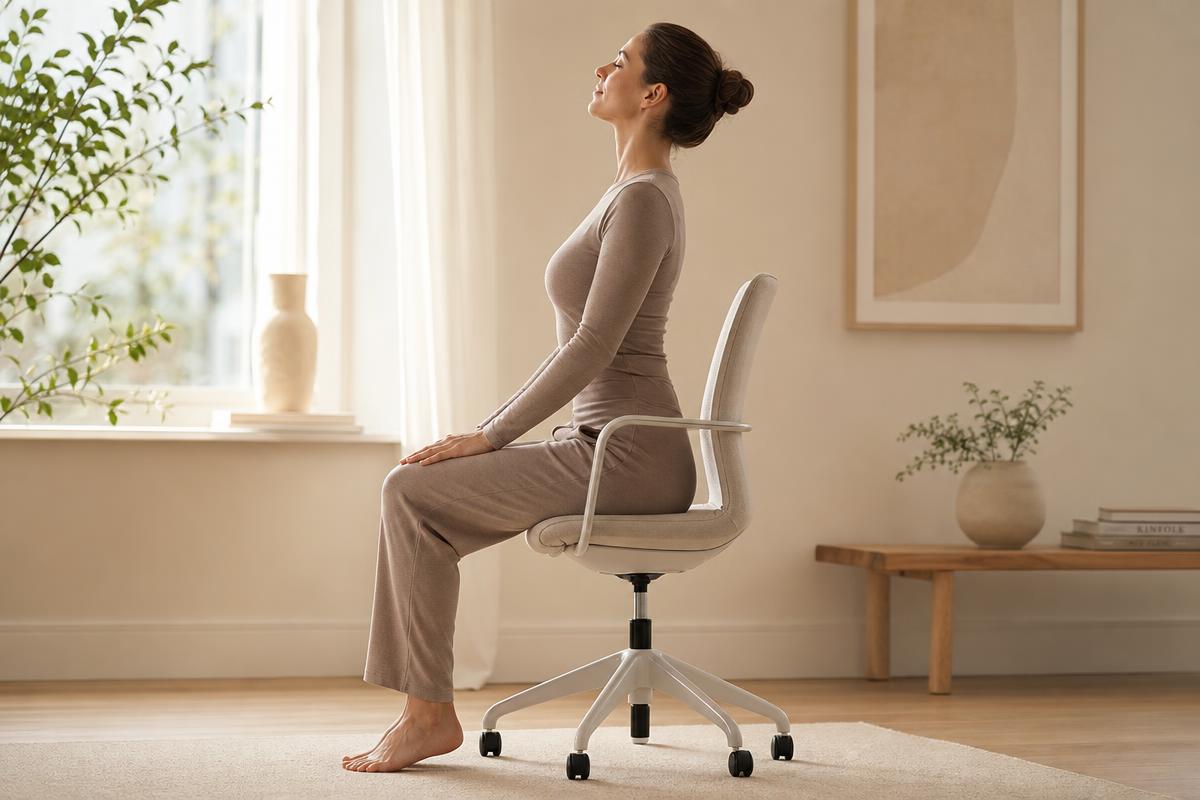
1. Seated cat-cow (60 seconds)
Hands on knees. Inhale and roll the chest forward, shoulder blades drawing together, gaze lifting slightly. Exhale and round the spine, chin toward the chest, navel drawing back. Move with the breath rather than to a count. This is the single most useful thing you can do for a spine that has been static since nine — it restores segment-by-segment movement before you ask for anything bigger.
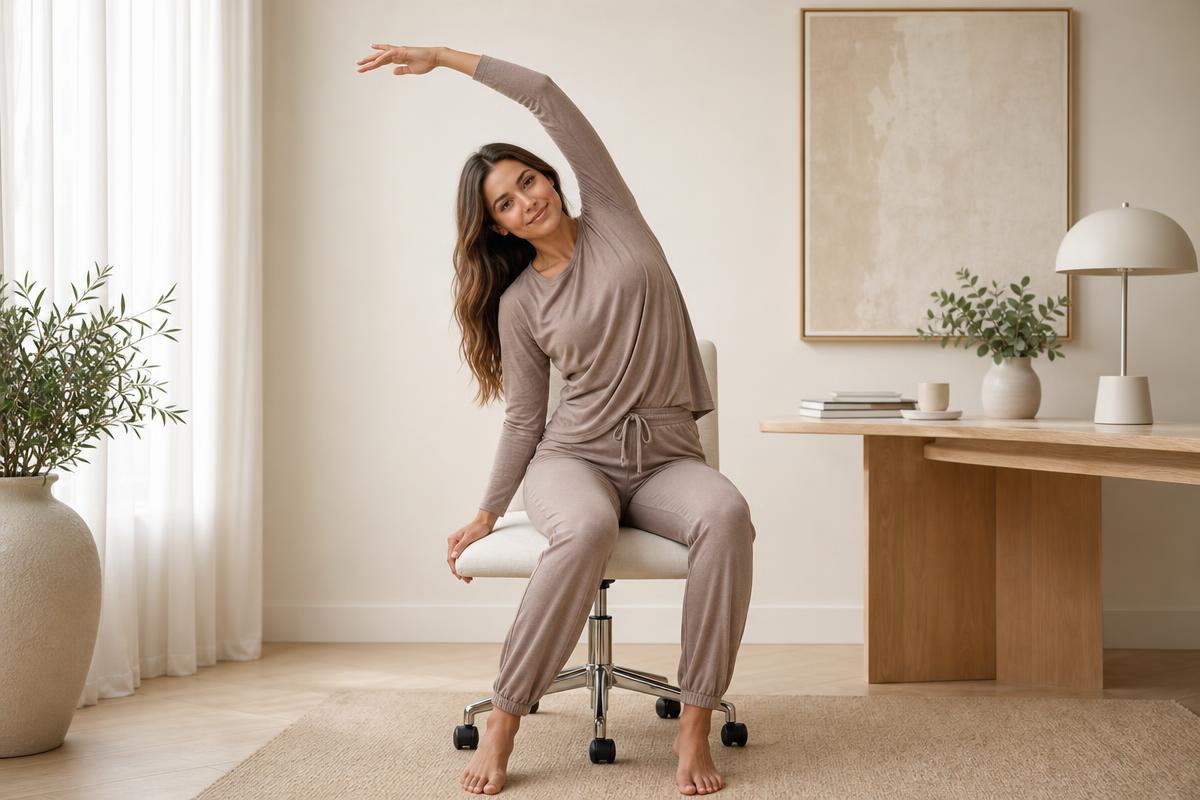
2. Seated side bend (45 seconds each side)
Right hand on the seat beside you, left arm sweeping overhead. Reach out and over rather than crunching down. You are looking for length between the ribs and the hip — the intercostal space that shallow desk breathing quietly closes. Take three slow breaths, feeling the top ribs open on each inhale, then switch.
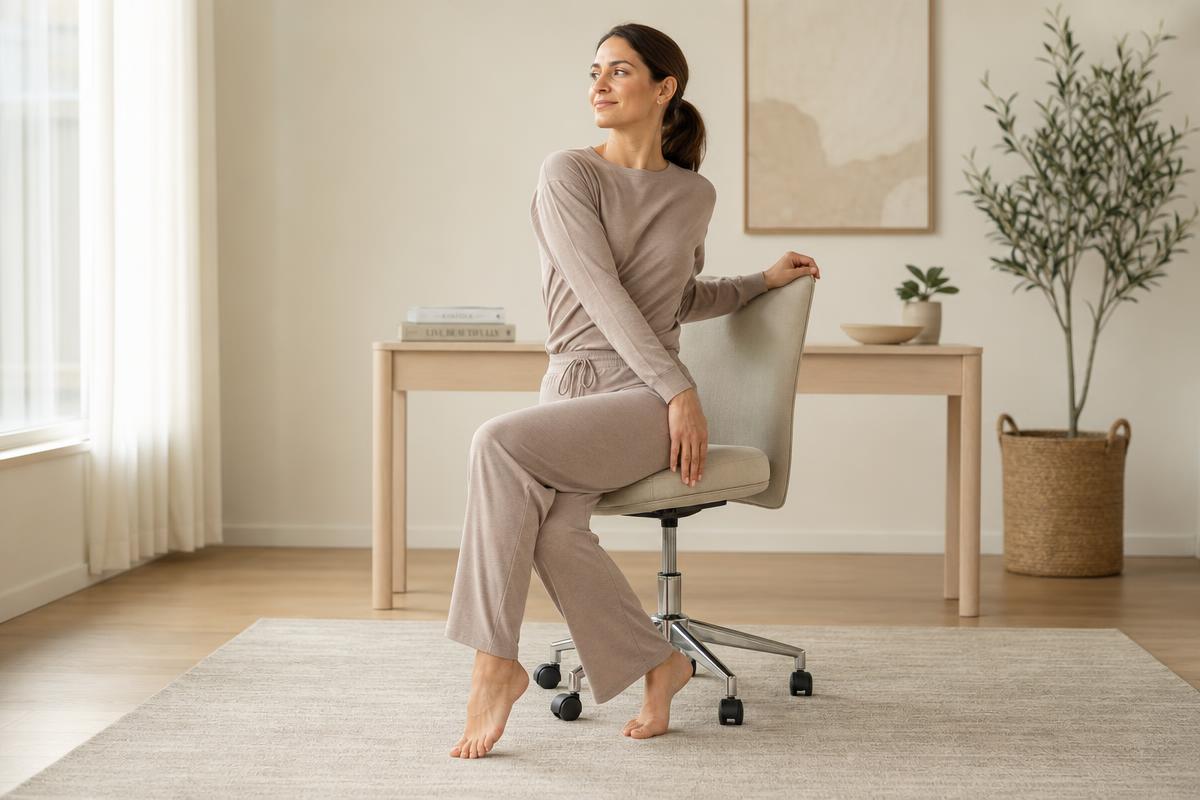
3. Seated spinal twist (45 seconds each side)
Feet planted, left hand on the outside of the right knee, right hand on the back of the chair. Inhale to lengthen, exhale to turn — from the mid-back, not the neck. Keep both sitting bones heavy so the twist stays in the thoracic spine. Rotation is the range office work steals first and the one that most reliably eases upper-back tightness.
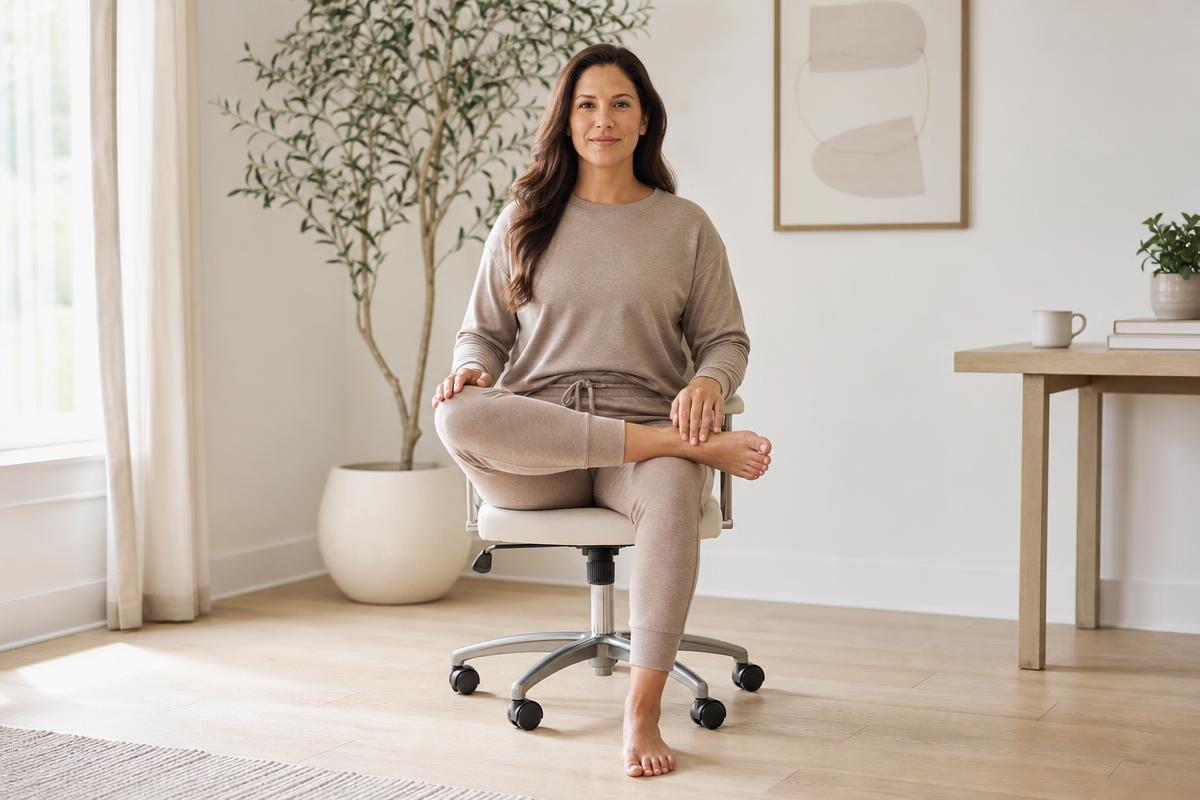
4. Seated figure four (60 seconds each side)
Cross the right ankle over the left thigh, letting the right knee open outward. Sit tall, then hinge gently forward from the hips. This reaches the glute and outer hip — where hours of sitting compress and where a great deal of lower-back complaint actually originates. Go to a firm stretch, never a sharp one.
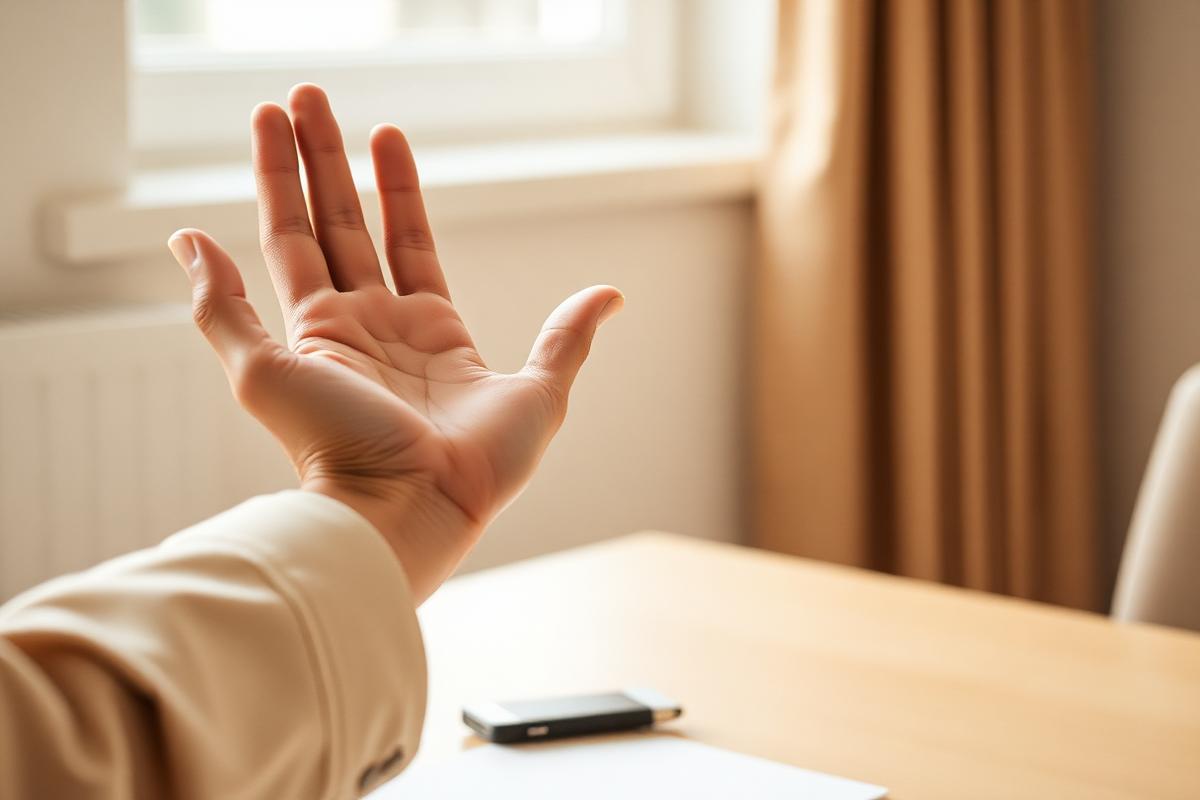
5. Wrist and forearm release (45 seconds)
Extend one arm, palm up, and use the other hand to draw the fingers gently back. Hold, then flip the palm down and repeat. Finish by making slow fists and spreading the fingers wide, ten times. Typing and trackpads shorten the forearm flexors all day; two minutes here is worth more than any ergonomic gadget.
6. Seated eagle arms (45 seconds each side)
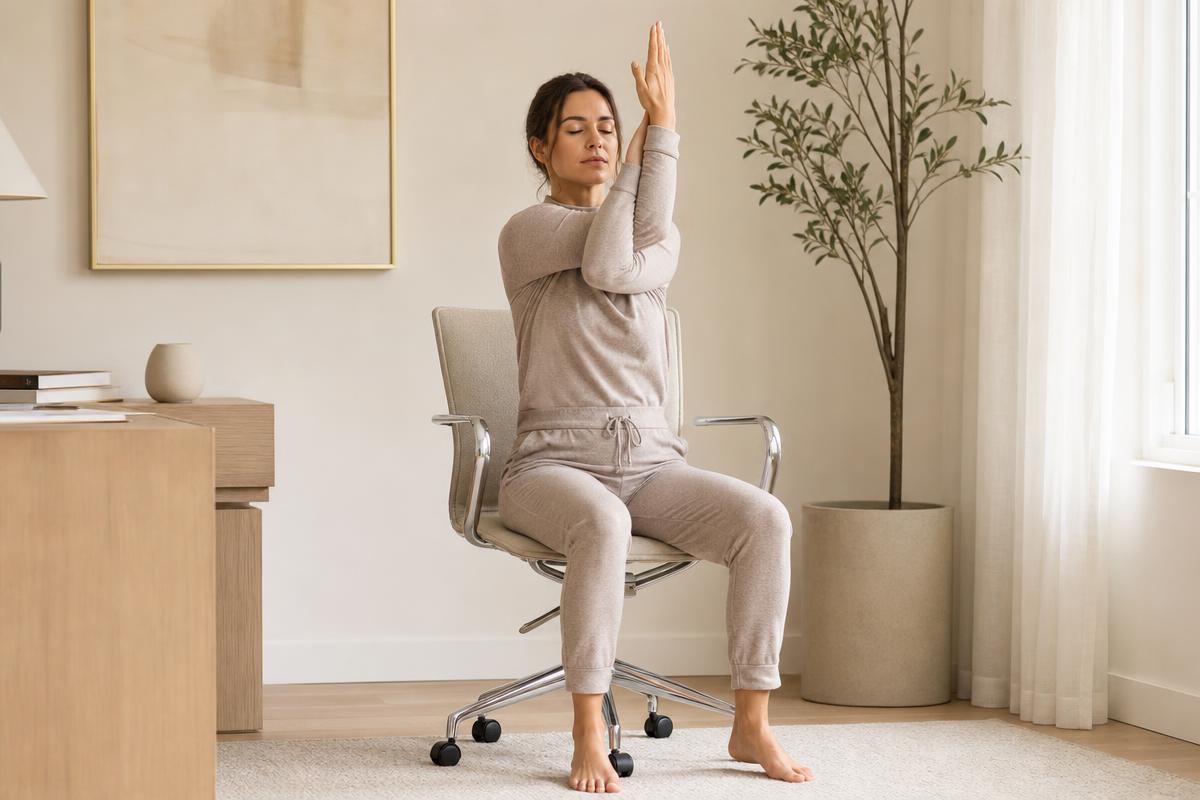
Cross the right arm under the left, backs of the hands or palms together, and lift the elbows to shoulder height while drawing the shoulder blades apart. This is the antidote to the rounded, forward-shoulder shape a laptop trains into you. Expect it to feel oddly emotional across the upper back — that region holds a lot of held breath.
7. Seated forward fold (60 seconds)
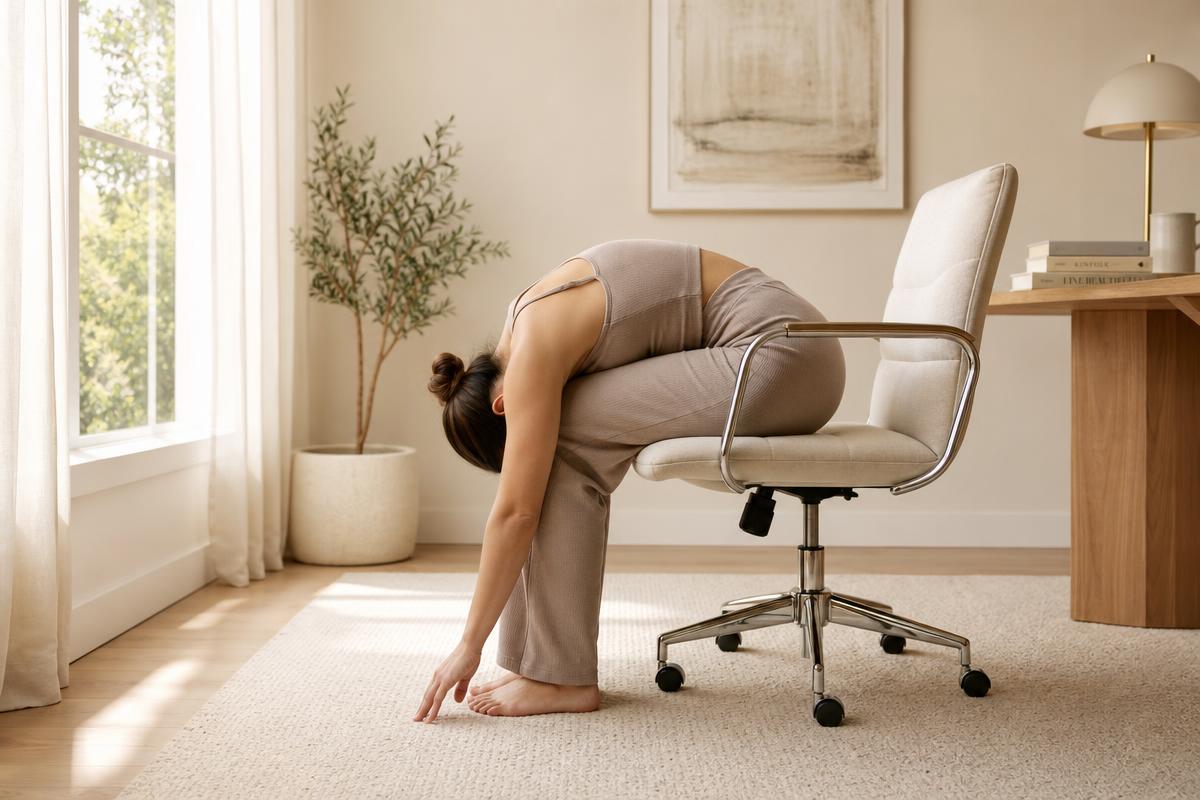
Feet wide, hinge forward and let the torso hang between the thighs, arms and head heavy. If the office makes this awkward, keep the hands on the desk and fold halfway instead. Dropping the head below the heart is a fast, reliable signal to the parasympathetic nervous system — this is the pose to use before a difficult conversation.
8. Seated stillness with long exhale (2 minutes)
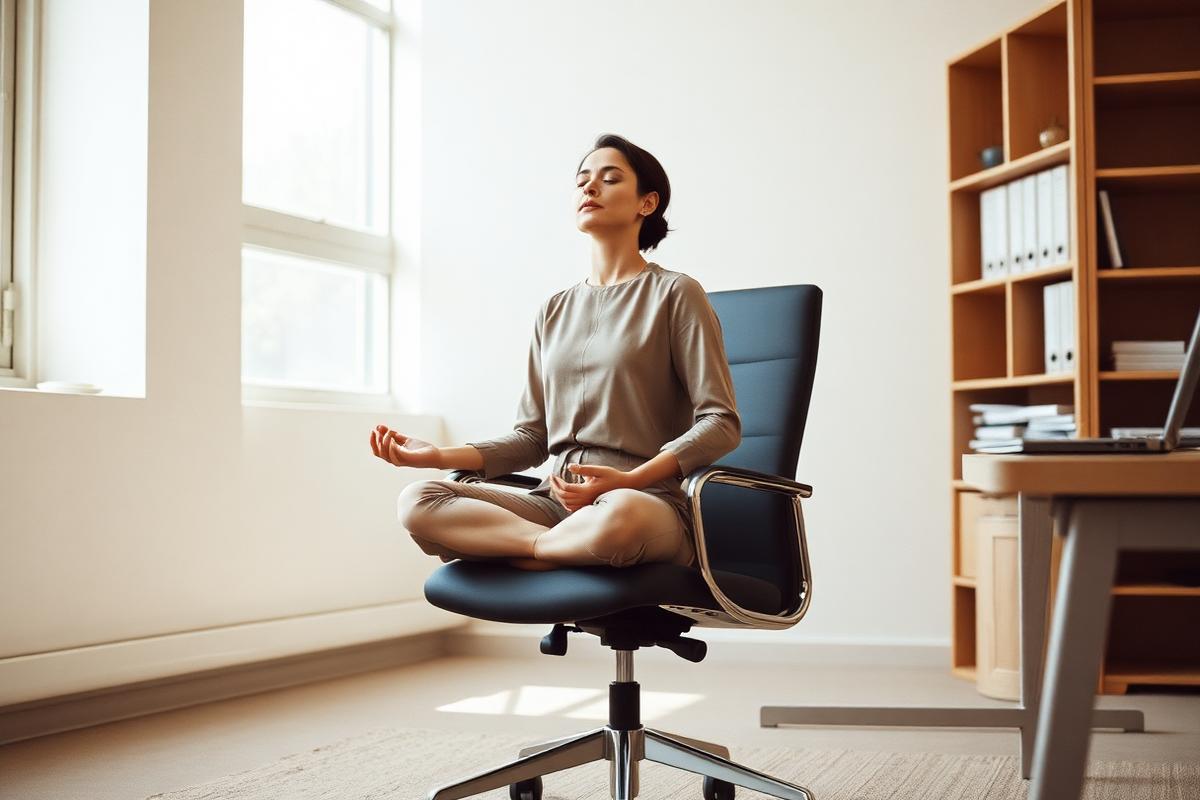
Feet flat, hands resting in the lap, eyes soft or closed. Inhale for four, exhale for six or eight. Do nothing else. The movement earned you the space; this is the part that changes how the rest of the afternoon feels. Skipping it is the most common mistake, and the only one that matters.
The point is not to leave your desk. It is to stop leaving your body there.
When to do it
- Mid-morning, after the first block of focused work — poses 1 to 3.
- After lunch, instead of a second coffee — poses 4 to 6.
- Before a hard meeting — poses 7 and 8, nothing else.
- End of day, as a boundary between work and home — the whole sequence, once through.
Three objects that make desk practice more likely
You need almost nothing for chair yoga, which is the point. But three small things remove the last excuses — a cushion that fixes your sitting position, something to soften the wrists, and a strap for the shoulders that will not open on their own yet.
Ergonomic seat or coccyx cushion
$Tilts the pelvis forward so sitting tall stops being effort.
View on AmazonGel wrist rest for keyboard and mouse
$Keeps the forearm release from being undone by the next hour of typing.
View on AmazonCotton yoga strap
$Lives in a drawer; makes eagle arms and shoulder openers accessible on a tight day.
View on AmazonA note on doing this in an open-plan office
Every pose above is quiet, clothed and small. Cat-cow, side bends, twists and the wrist work read as ordinary shifting in a chair. If you would still rather not, do the sequence in a meeting room between bookings, or in the ten minutes before your first call. The practice does not require privacy — only permission, which you can give yourself.